- Home
- Mod Living Spaces Learning Center
- Outdoor Kitchen & Grill Buying Guides
- How to Choose the Right Grill: Expert Buying Guide
Compare grill types, sizes, and features with expert buying tips from Mod Living Spaces to find the perfect grill for your outdoor cooking needs.
Written By
Dylan Wheeler
Mod Living Spaces | Learning Center
Buying a new grill should be exciting, but with so many brands, sizes, fuel types, and features available, choosing the right one can quickly become overwhelming.
Whether you're upgrading an old backyard grill or designing a complete outdoor kitchen, the best grill isn't necessarily the biggest or most expensive. It's the one that fits how you cook, how often you entertain, and what you expect from your investment.
At Mod Living Spaces, we help customers compare everything from affordable gas grills to premium built-in outdoor cooking systems.
In this guide, I'll walk you through the most important things to consider before buying a grill, including fuel type, size, construction quality, cooking features, and overall value.
Jump to the topic you're interested in.
The first decision is determining which type of grill fits your cooking style.
Each fuel type offers different advantages when it comes to flavor, convenience, temperature control, and maintenance.
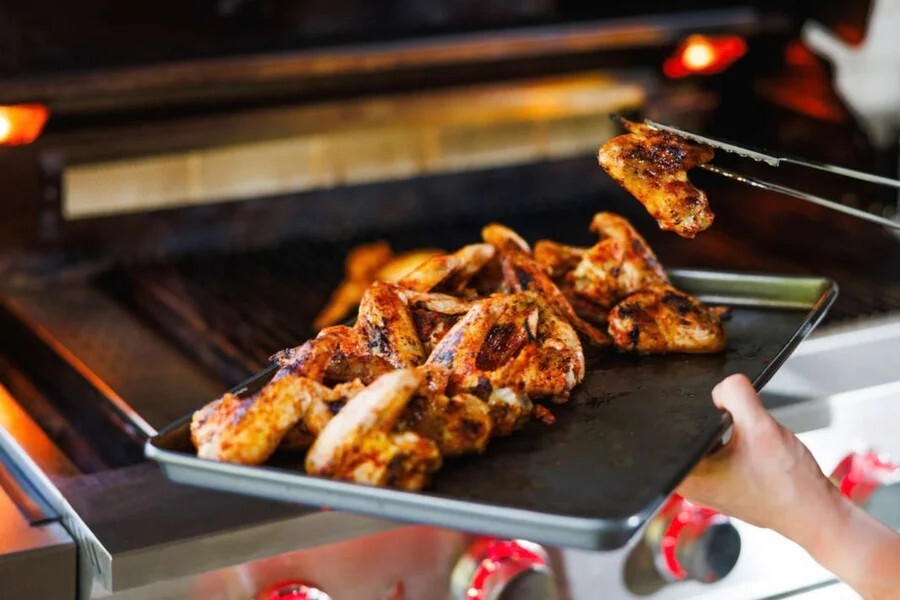
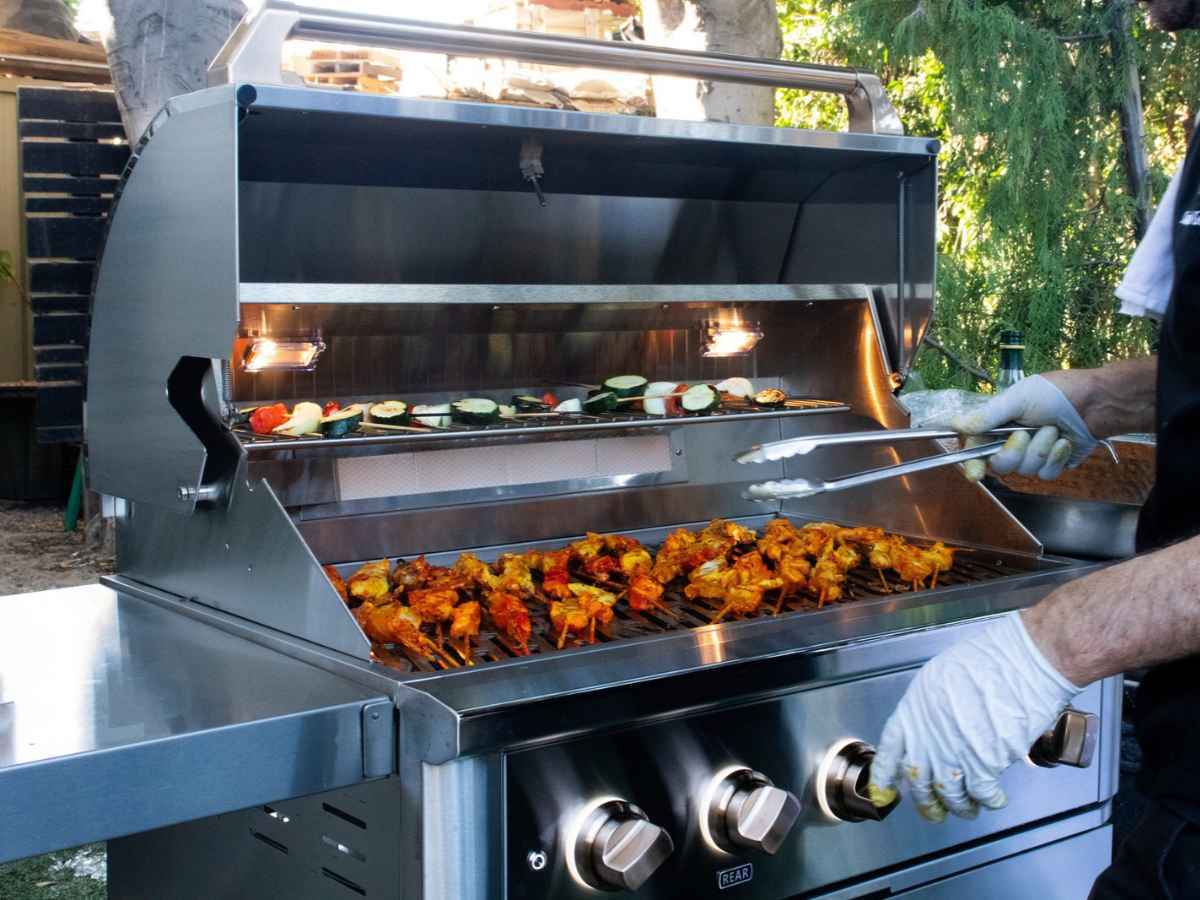
Gas grills are among the most popular choices for backyard cooking because they're easy to operate, heat up quickly, and provide convenient temperature control.
They're available in both natural gas and propane configurations.
Gas grills are excellent for everything from weeknight burgers to steaks, vegetables, seafood, and entertaining large groups.
Best For: Homeowners who value convenience, versatility, and consistent cooking performance.
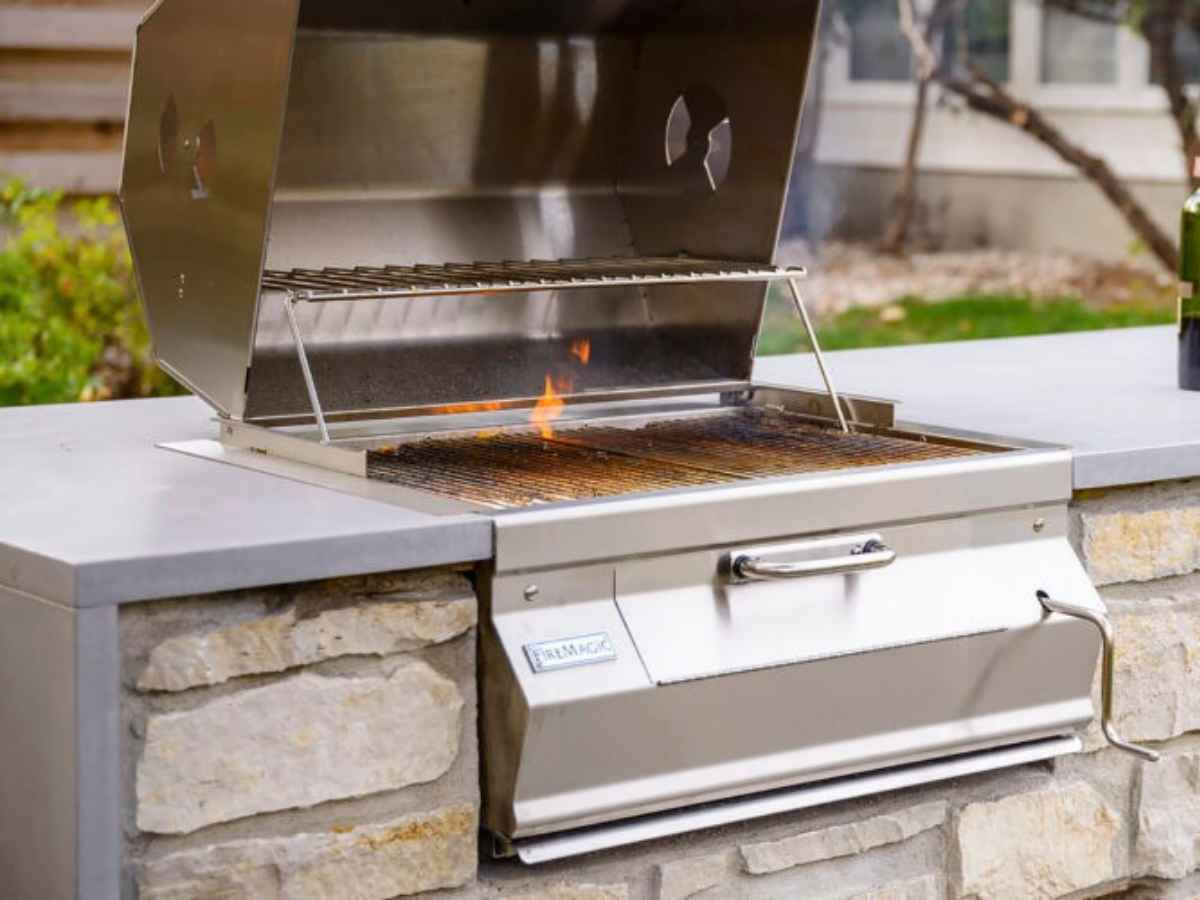
Charcoal grills deliver the distinctive flavor many people associate with traditional outdoor cooking.
They require more preparation and cleanup than gas grills, but they offer excellent high-temperature searing and the ability to cook with charcoal and wood.
Best For: Grill enthusiasts who enjoy hands-on cooking and authentic charcoal flavor.
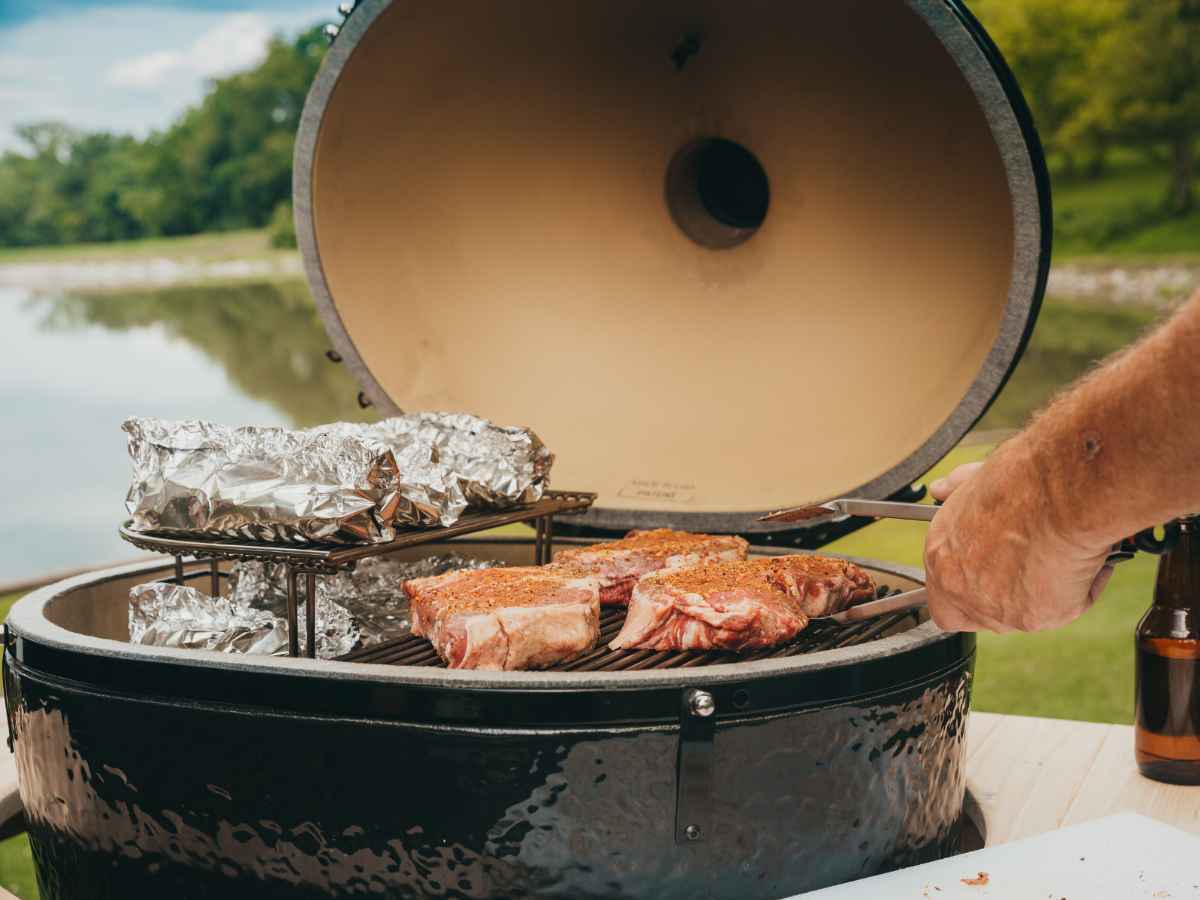
Kamado grills, such as Primo ceramic grills, are known for exceptional heat retention and cooking versatility.
Their insulated ceramic construction allows them to maintain low smoking temperatures while also reaching the high temperatures needed for searing and pizza.
Best For: Outdoor cooking enthusiasts who want to grill, smoke, roast, and bake with one appliance.
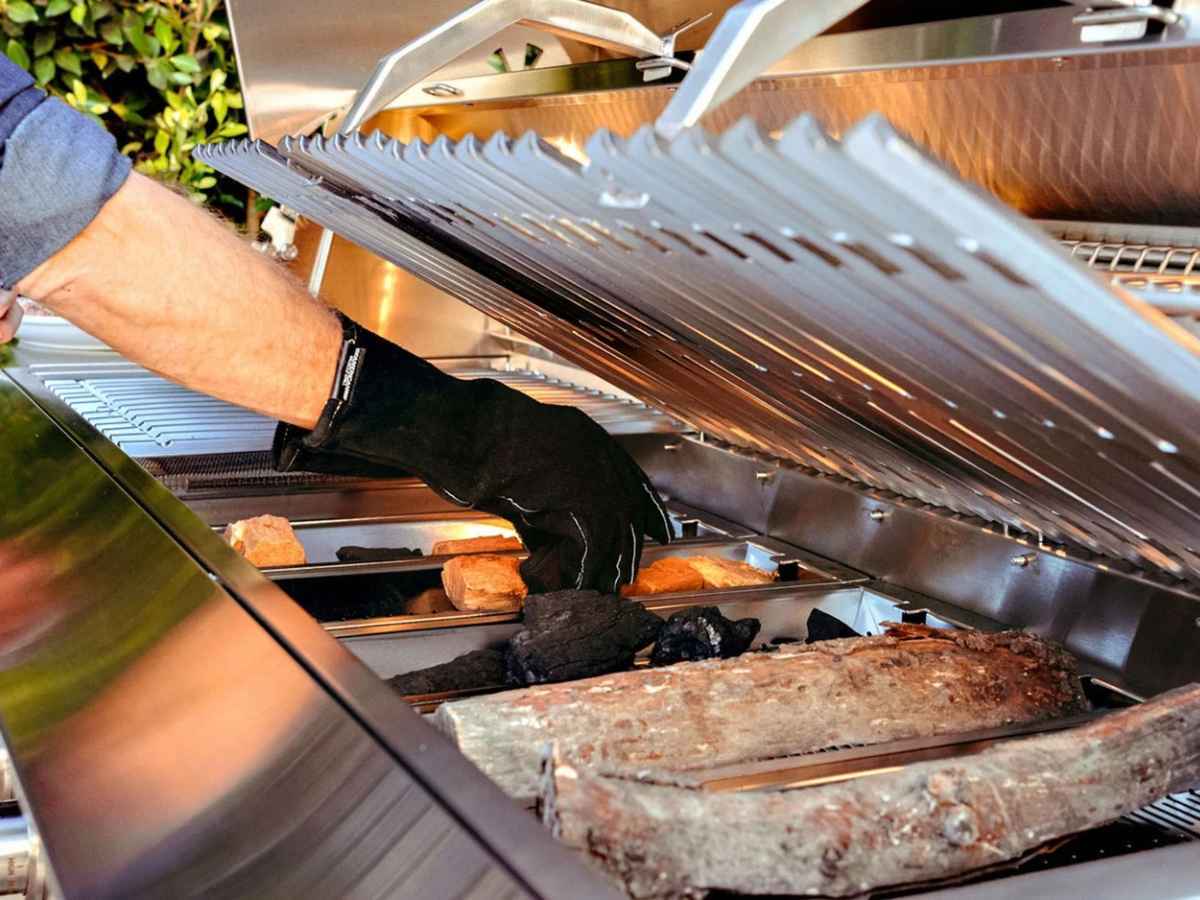
Some premium grills combine multiple cooking methods, allowing you to use gas, charcoal, or wood depending on the model.
These systems provide additional flexibility for homeowners who want the convenience of gas without giving up traditional live-fire cooking.
Best For: Serious grill enthusiasts who enjoy experimenting with different cooking styles.
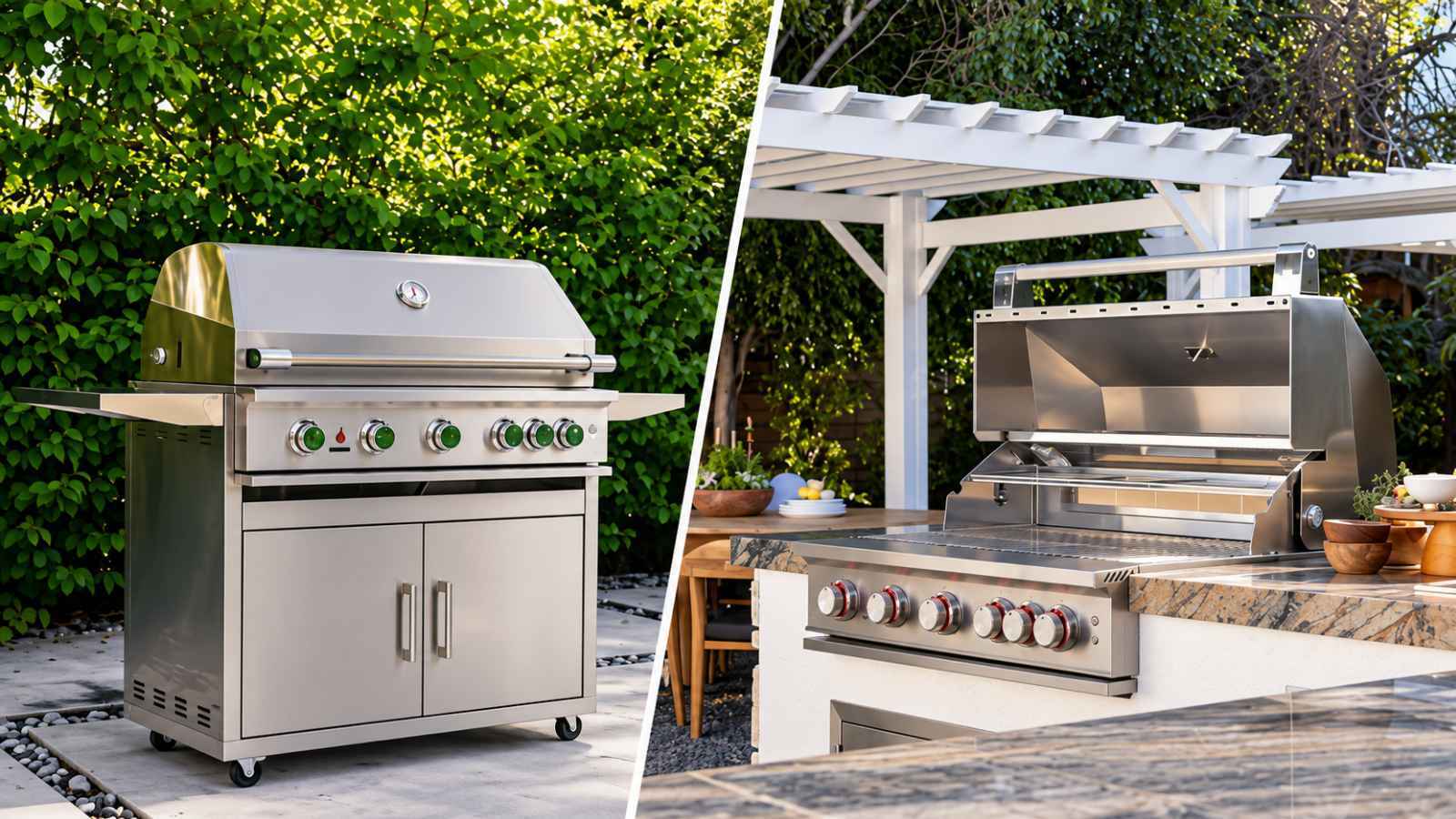
Another important decision is whether you want a built-in grill or a freestanding model.
Freestanding grills include a cart or cabinet that supports the grill.
They're typically easier to set up and offer more flexibility when positioning your cooking area.
Many premium freestanding grills feature the same burners, cooking systems, and construction quality as their built-in counterparts.
Built-in grills are designed to fit into a permanent outdoor kitchen island.
They're a popular choice for homeowners building a dedicated outdoor entertaining space with countertops, storage, refrigeration, and additional cooking appliances.
Built-in grills provide a clean, integrated appearance and can be paired with matching outdoor kitchen components.
However, they require more planning, including proper cutout dimensions, ventilation, clearances, and gas connections.
Our Recommendation: Choose a built-in grill if you're planning a permanent outdoor kitchen. If you want a simpler setup with greater flexibility, a freestanding grill may be the better choice.
One of the most common mistakes homeowners make is choosing a grill based solely on its width.
A larger grill provides more cooking space, but it also takes up more room, requires more fuel to heat, and generally costs more.
Consider how many people you typically cook for and how often you entertain.
| Grill Width | Ideal Use |
|---|---|
| 25"–30" | Smaller families, patios, and everyday grilling |
| 32"–36" | Families and regular entertaining |
| 38"–42" | Larger gatherings and versatile cooking |
| 44"+ | Large outdoor kitchens and frequent entertaining |
These are general guidelines. Actual cooking area and burner configurations vary by manufacturer.
A grill with multiple burners allows you to create different temperature zones.
For example, you can sear steaks over high heat while cooking vegetables at a lower temperature on the opposite side.
Our Recommendation: For most homeowners, having enough space for multiple cooking zones is more useful than simply purchasing the widest grill available.
Two stainless steel grills can look nearly identical but perform very differently over time.
One of the biggest differences is the quality of the materials used throughout the grill.
Premium gas grills commonly use 304 stainless steel because of its corrosion resistance and durability.
It's particularly desirable for outdoor kitchens and grills exposed to varying weather conditions.
However, not every component on a stainless steel grill is necessarily made from 304 stainless steel.
When comparing models, look at the construction of the firebox, burners, cooking grates, hood, and internal components.
A double-lined hood can help retain heat, improve temperature stability, and reduce heat discoloration on the exterior.
This is a feature worth considering if you regularly cook at higher temperatures.
Burners are among the most important components of any gas grill.
Premium grills may use cast stainless steel, stainless steel tube, or other durable burner designs.
Pay attention to burner quality, replacement-part availability, and warranty coverage rather than focusing only on advertised BTU ratings.
Our Recommendation: Look beyond the exterior finish. Prioritize quality internal components, durable construction, and dependable warranty support when comparing grills.
BTUs, or British Thermal Units, measure heat energy.
When comparing gas grills, manufacturers commonly advertise the total BTU input of the burners.
However, more BTUs don't automatically mean better grilling performance.
A well-designed grill with efficient burners, proper heat distribution, and good heat retention can outperform a grill with a higher BTU rating.
Look for a combination of:
Our Recommendation: Focus on consistent heat distribution, temperature control, and overall cooking performance rather than choosing a grill based on BTU ratings alone.
Modern grills offer a wide range of features, but not every upgrade is necessary.
Focus on the features that match how you actually cook.
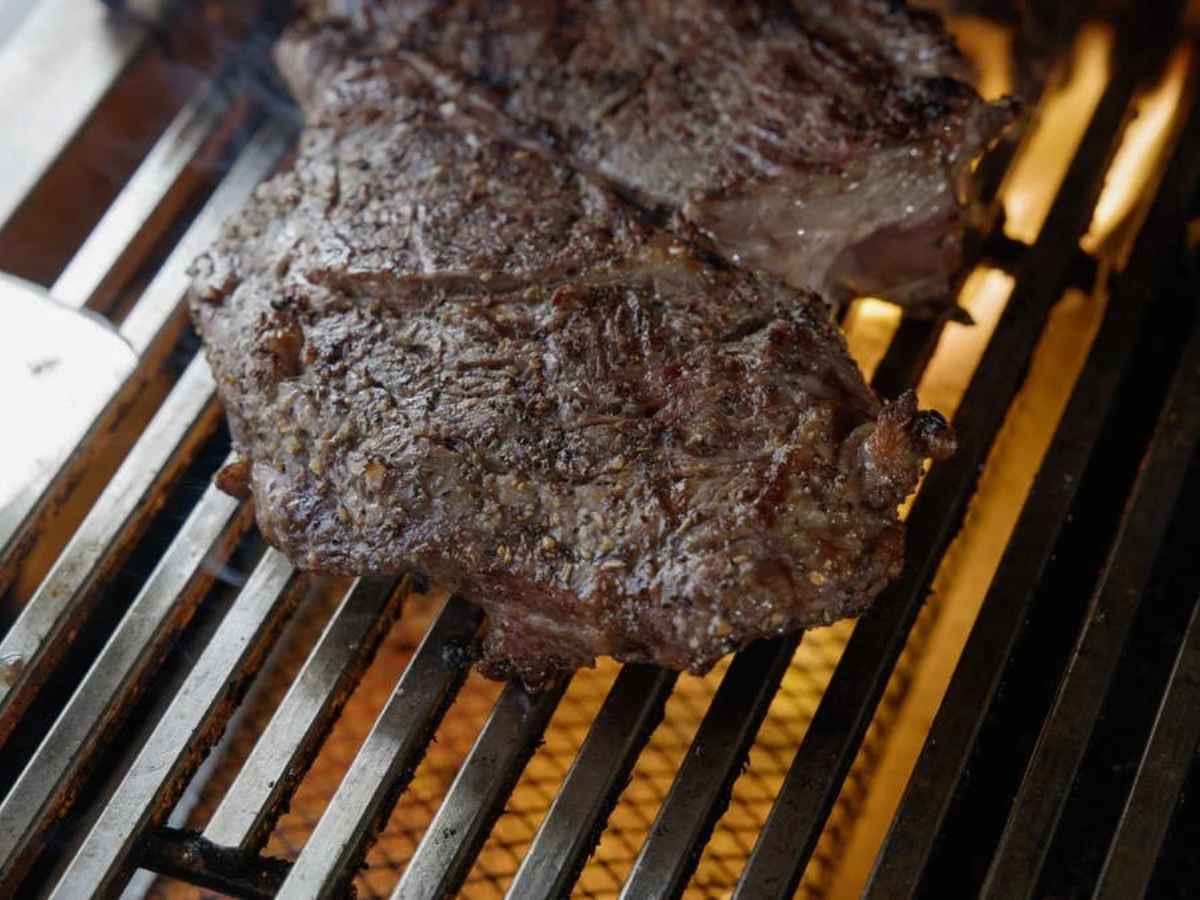
Infrared burners produce intense radiant heat and are particularly useful for searing steaks and other meats.
Some grills include a dedicated infrared searing zone, while others offer an infrared rear burner for rotisserie cooking.
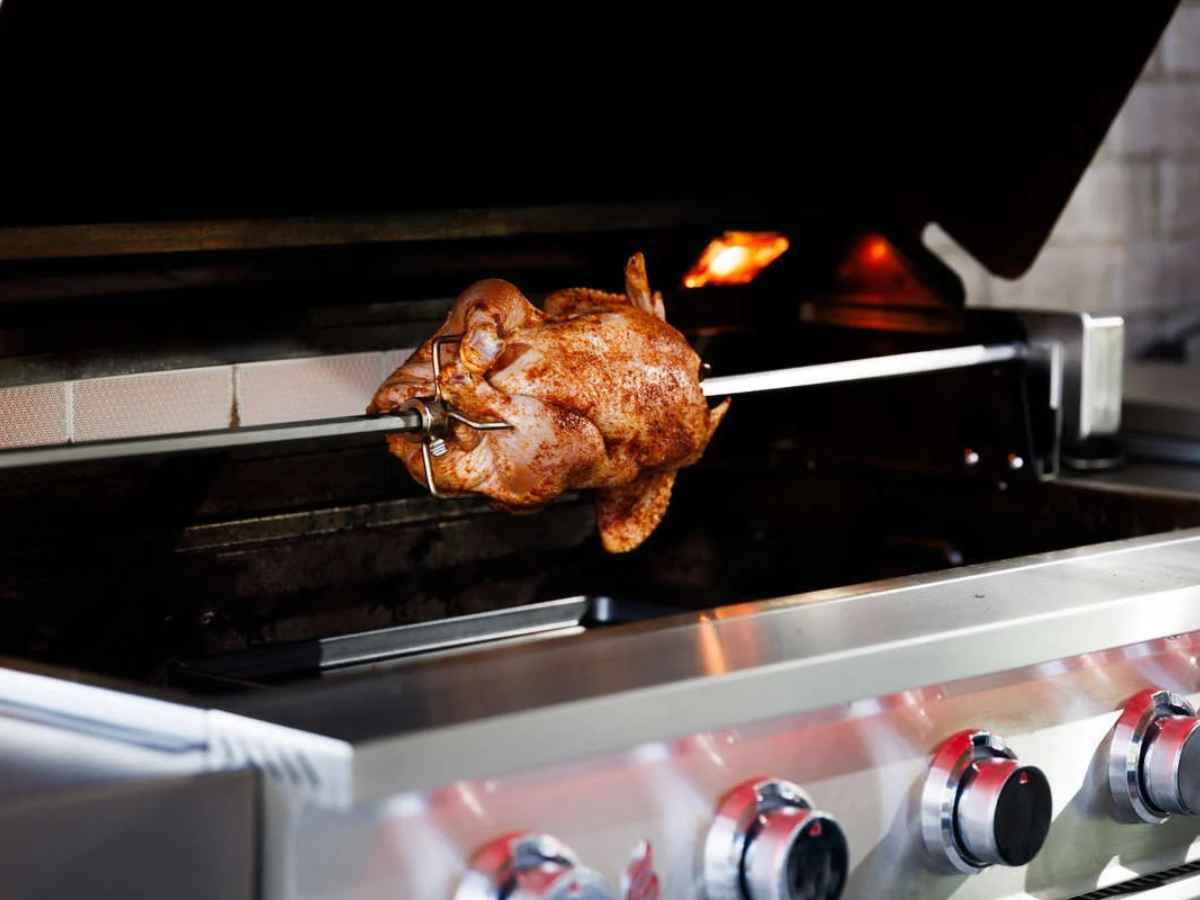
A rotisserie slowly rotates food over heat, making it excellent for whole chickens, roasts, and other larger cuts of meat.
If you enjoy rotisserie cooking, look for a grill with a compatible rear burner and rotisserie kit.
Grill lighting can be surprisingly useful if you frequently cook in the evening.
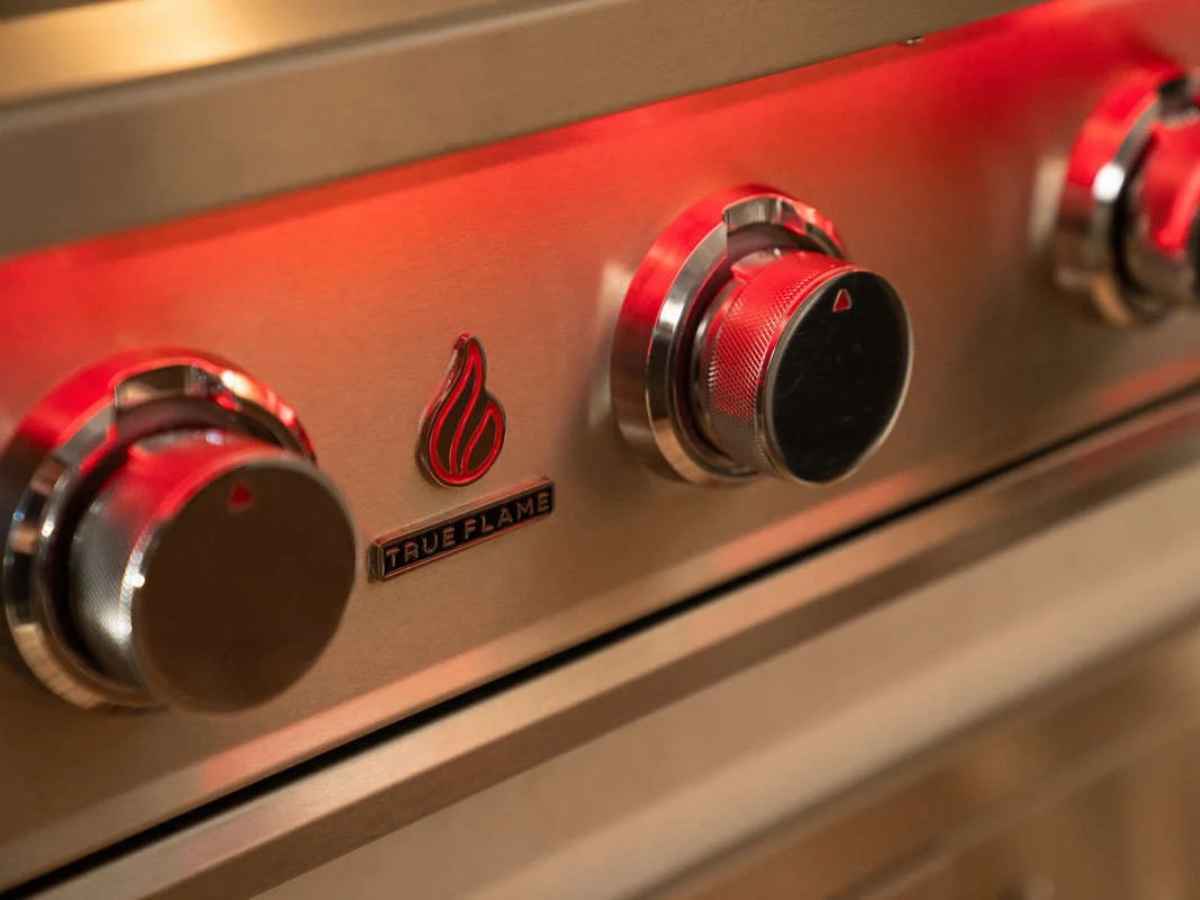
Look for illuminated control knobs and interior cooking lights that improve visibility after dark.
Our Recommendation: Prioritize the features you'll use regularly. A well-built grill with the right cooking options will provide more value than paying extra for features you rarely need.
If you're building an outdoor kitchen, I always recommend choosing the grill before finalizing your island dimensions.
Every built-in grill has specific requirements for cutout dimensions, clearances, gas connections, and ventilation.
Designing the island around your chosen grill can prevent costly modifications later.
If your outdoor kitchen is located under a covered patio, you may also need an approved outdoor-rated ventilation hood.
Important Installation Reminder: Always follow the grill manufacturer's installation requirements, including combustible clearances and ventilation specifications.
Every grill requires maintenance, regardless of price or construction quality.
Gas grills should have their cooking grates, grease trays, burners, and internal components cleaned according to the manufacturer's recommendations.
Charcoal grills require regular ash removal, while pellet grills need additional maintenance of their burn pots, grease systems, and pellet-handling components.
Our Recommendation: Regular maintenance helps preserve cooking performance, reduces grease-fire risks, and extends the life of your investment.
Gas grills are generally the easiest option for beginners because they offer quick ignition, adjustable heat, and relatively straightforward operation.
For many families, a 32" gas grill provides plenty of cooking space for everyday meals and entertaining.
However, actual cooking capacity depends on the grill's burner layout and usable cooking area.
For homeowners looking for long-term durability, 304 stainless steel is often worth considering because of its corrosion resistance.
Construction quality, maintenance, and environmental exposure still matter.
Not necessarily. Burner design, heat distribution, cooking grates, and heat retention all influence performance.
A higher BTU rating doesn't guarantee better results.
A built-in grill is designed for installation in an outdoor kitchen island, while a freestanding grill includes a cart or cabinet.
Many manufacturers offer similar cooking systems in both configurations.
At Mod Living Spaces, we carry a variety of respected outdoor cooking brands, including Summerset, TrueFlame, American Made Grills, Fire Magic, Napoleon, Wildfire, and Primo.
Each brand offers different advantages in construction, performance, features, and price.
The best choice depends on your cooking preferences, installation requirements, and budget.
The right grill comes down to how you plan to use it.
If convenience is your priority, a quality gas grill is an excellent starting point.
If you love traditional BBQ flavor, consider charcoal, kamado, or pellet grills.
If you're building a permanent outdoor kitchen, pay close attention to grill dimensions, construction quality, available accessories, and long-term warranty coverage.
Most importantly, don't choose a grill based on price, size, or BTU ratings alone.
A well-built grill that matches your cooking style will provide more value than an oversized grill filled with features you'll rarely use.
At Mod Living Spaces, we help homeowners compare grills, outdoor cooking appliances, and complete outdoor kitchen setups.
Whether you're replacing an old freestanding grill or designing a custom outdoor kitchen, our team can help you compare brands, sizes, cooking features, and construction quality.
Call us with any questions before ordering. We're happy to help you find a grill that fits your space, cooking style, and budget.
As a family-owned business, Mod Living Spaces combines personalized customer service with industry expertise to help you compare products and find the right fireplace, grill, or outdoor living equipment for your project.